Barry Ord Clarke emphasizes the significance of ants in fly fishing, as they often end up on water, sparking feeding frenzies among fish. He recommends having accurate ant imitations due to fish selectivity and introduces a semi-realistic pattern that includes wings, body, legs, and head. Clarke suggests tying black, red, and mixed-color variants to match local ant species, noting that the pattern is effective whether floating or slightly submerged.
BY BARRY ORD CLARKE
Generally speaking, ants are probably the most important terrestrial insect for the fly angler, no matter where you fish. They are extremely poor aviators, so they leave the nest in large numbers to increase their chances of establishing a new colony. When they eventually take to the wing, they are placed at the mercy of the wind and end up where it takes them.
If they are unlucky and land on water, especially in large numbers, the fish go into a feeding frenzy. In extreme situations I have experienced that the trout will take just about any fly that is presented to them. But other times they can be so selective that they will only take the perfect pattern with the right silhouette, colour and size. Therefore, its important to have a good imitation at hand.
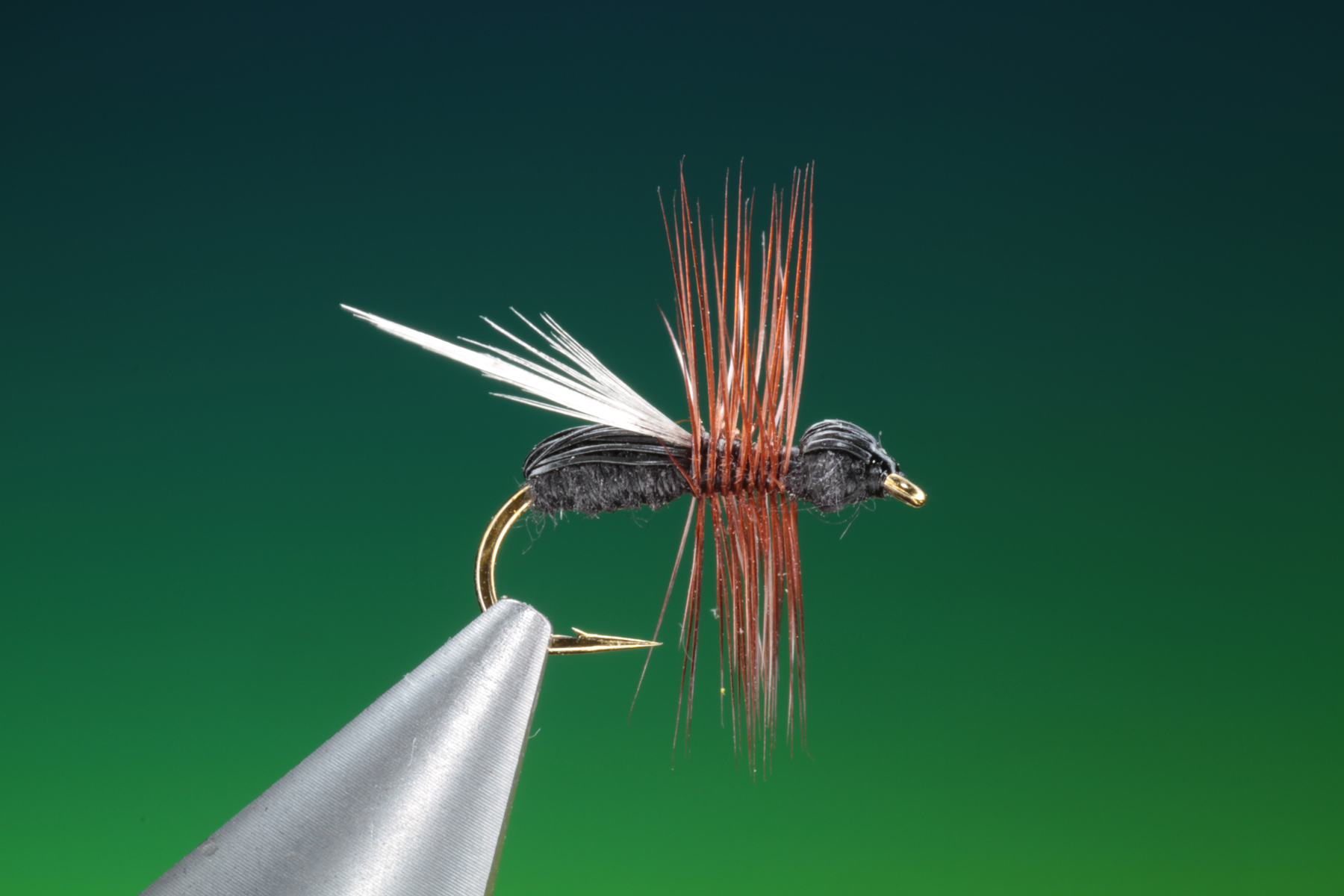
The Flying Ant is what we call, a semi realistic pattern, that includes the wings, body, legs and head. You can get away with fishing much more simple patterns, but with this one, you also learn several good techniques that you can carry further with you for tying other patterns.
The naturals that you are most likely to encounter when fishing, will be black, but on occasions can also be red, so here are two other variants of this pattern that may be worth you tying, depending on how prevalent ants are for your own fishing! Both are exactly the same pattern as this, but with a slight change in colour. The first, all in red, including the wings. The second is one that I have increasing success with, is with a red rear body and a black head, simply a mixture of both. This pattern will float well, especially if treated with a fly floatant. But if your ant sinks a little when fishing, don’t take concern, because they swim as well as they fly.
Hook: Mustad dry fly hook size 12-16
Thread: Sheer 14/0 black
Body: Super Fine dubbing black, polypropylene or black deer hair
Wings: Dun cock hackle tips
Hackle: Brown saddle hackle
Head: Super Fine dubbing black, polypropylene or black deer hair
BARRY ORD CLARKE
Website: https://thefeatherbender.com
Instagram: https://www.instagram.com/barryordclarke/
Facebook: https://www.facebook.com/barry.o.clarke